
Key takeaways
- An aerobic septic system adds air to the treatment tank, so bacteria break waste down faster and the water leaving the system is cleaner.
- It costs more to install and run than a conventional system, and it needs regular service by contract.
- In Florida, aerobic treatment units certified to NSF 245 are one of the approved nitrogen-reducing (ENR) systems that some properties are now required to use.
- In parts of Orange, Seminole and Volusia counties, a failed system on a small lot may have to be upgraded to an ENR system instead of repaired like for like.
Most homes in Central Florida run on a conventional septic system: a tank and a drain field. On some properties that setup doesn’t work well, because of a high water table, poor soil or a site close to a spring or a lagoon. That’s where an aerobic septic system comes in.
This guide explains what an aerobic septic system is, how it works, its pros and cons, what drives its cost, and when Florida rules require one. If you are comparing it with a traditional tank-and-drainfield setup, the drain field page explains how that side of the system works.
What is an aerobic septic system?
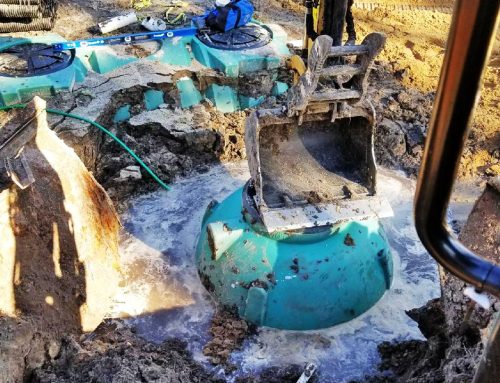
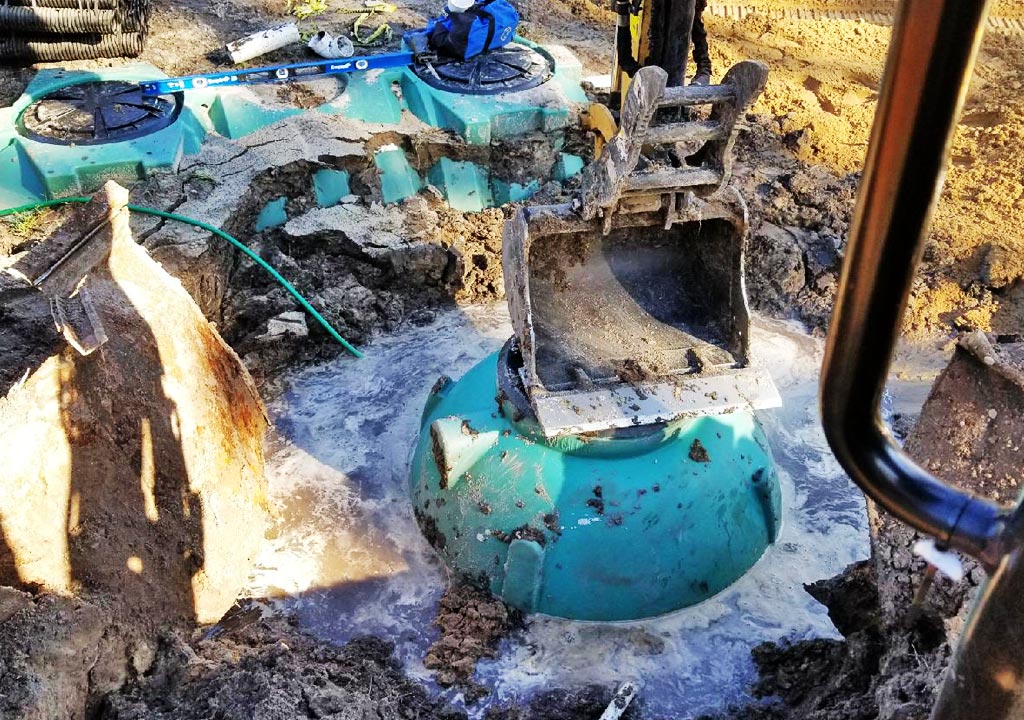
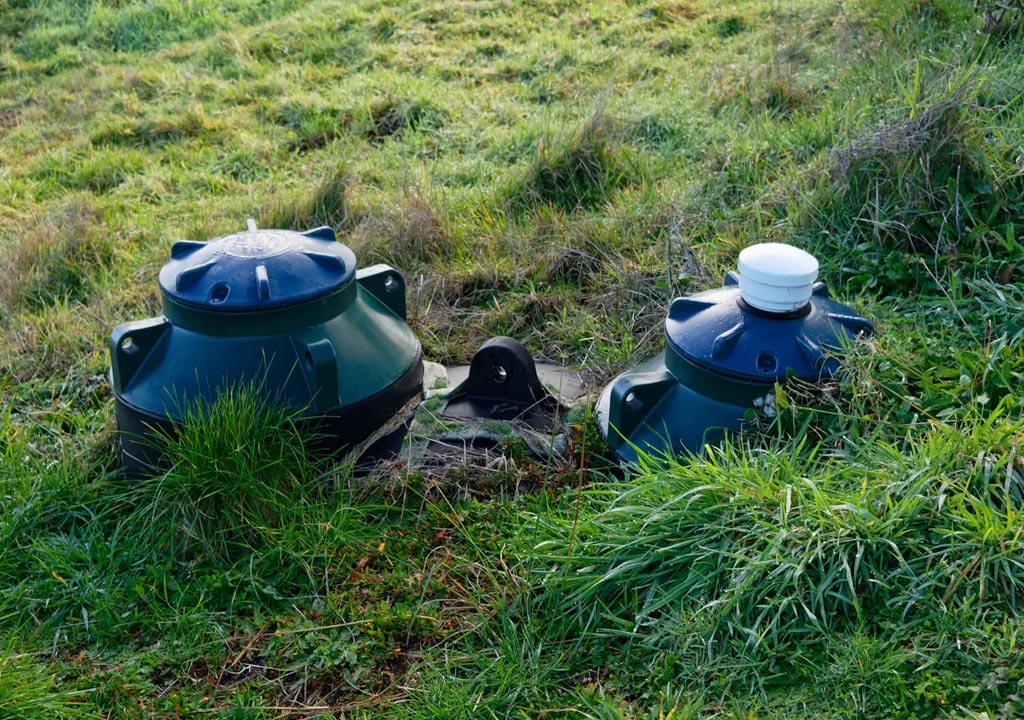
An aerobic septic system, also called an aerobic treatment unit (ATU), is an advanced treatment septic system that pumps air into the wastewater. A conventional tank relies on anaerobic bacteria, which live without oxygen and work slowly. An aerobic unit feeds oxygen to aerobic bacteria, which digest organic matter much faster and more completely.
The result is cleaner effluent (the treated water that leaves the system) before it reaches the drain field or the soil.
How an aerobic septic system works
- Pre-treatment: wastewater enters a first tank, where solids settle, just as in a conventional system.
- Aeration: the liquid moves to an aeration chamber, where a blower or air pump adds oxygen.
- Treatment: aerobic bacteria break down most of the organic material.
- Settling and discharge: remaining solids settle in a clarifier, and the treated water goes on to the drain field or another approved dispersal method. Some systems add a disinfection step.
Because the system has an air pump, controls and an alarm, it needs electricity and regular service to keep working.
Pros of an aerobic septic system
- Cleaner water leaves the system: better treatment protects groundwater, springs and lagoons.
- Works where a conventional system struggles: high water tables, poor soil and small lots.
- Can meet Florida’s nitrogen rules: units certified to NSF 245 count as an enhanced nitrogen-reducing system (see below).
- Easier on the drain field: cleaner effluent puts less load on the soil.
Cons of an aerobic septic system
- Higher cost to install: more equipment and more design work than a conventional system.
- Ongoing service: the air pump, filters and alarm need regular checks, and Florida requires an operating permit for these systems.
- Electricity: the blower runs on power, so the system adds a little to the electric bill and stops treating during an outage.
- Not a DIY system: installation needs a permit, a design and an inspection.
What drives the cost of an aerobic system
An aerobic system costs more than a conventional septic system, both to install and to run. What moves the price on a given property:
- The unit itself and its certification (NSF 245 for nitrogen reduction)
- The size of the home and the drain field the rules require
- Soil and water table conditions, and whether the field has to be raised
- Electrical work for the blower and the alarm
- Permit, design and county fees, plus the yearly operating permit
- Regular maintenance service and pump-outs
Because each site is different, we price aerobic installations after a site evaluation. Incentive money can cover a large part of an upgrade: Orange County’s Septic Upgrade Incentive Program offers up to $10,000 per household for upgrades inside the Wekiwa Priority Focus Area, and Seminole County runs its own incentive program.
When Florida rules require a nitrogen-reducing system
Florida now requires enhanced nutrient-reducing (ENR) septic systems in some places, and an NSF 245 aerobic treatment unit is one of the approved options, alongside in-ground nitrogen-reducing biofilters and other performance-based systems:
- New systems: since July 1, 2023, new systems on lots of one acre or less in areas covered by a basin management plan (BMAP) or similar restoration plan must be ENR when sewer is not available.
- Repairs in springs areas: in the Wekiwa and Rock Springs Priority Focus Area (parts of Orange and Seminole), lots under one acre need ENR when an existing system is repaired or modified. In the Volusia Blue Spring, Gemini Springs and DeLeon Springs areas, the rule applies to lots of one acre or less.
- Northern Indian River Lagoon: any lot size in the basin plan area, including parts of Volusia County.
Sources: Florida DEP, permitting of ENR systems and ENR requirements by area. You can check your address on DEP’s springs protection map, and our guide to Florida septic regulations covers the rest of the rules. If your drain field is failing in one of these areas, read what Florida requires for a drain field repair before you plan the work.
Not sure if your address needs an ENR system? Mathis & Sons Septic installs and services aerobic treatment units across Central Florida. Ask us to check your property and get a free quote.
Maintenance and operating permits
Florida requires an operating permit for aerobic treatment units, performance-based systems and commercial systems (source: Florida Department of Health in Orange County). In practice, an aerobic system needs:
- Regular service visits to check the air pump, the controls, the alarm and the filters
- Pump-outs of the first tank when sludge builds up
- A quick call when the alarm sounds, since it usually means the blower or a float has stopped
A conventional tank, by comparison, mostly needs a pump-out every 3 to 4 years.
Is an aerobic system right for your property?
It usually makes sense when the soil drains poorly, the water table is high, the lot is small, the home is near a spring or lagoon, or Florida rules require an ENR system at your address. If none of those apply, a conventional system is usually the simpler and cheaper choice. Either way, a site evaluation tells you which one fits.
Frequently asked questions
How does aerobic septic system maintenance work?
A technician checks the air pump, controls, alarm and filters on a regular schedule, and the first tank is pumped when sludge builds up. Florida also requires an operating permit for aerobic units, so the service visits are part of keeping the system legal, not only working.
How much does an aerobic septic system cost?
More than a conventional system, because of the unit, the electrical work, the design and the ongoing service. The final price depends on the home, the soil, the water table and the permits. Incentive programs, like Orange County’s up to $10,000 in the Wekiwa Priority Focus Area, can cover part of an upgrade.
What are the aerobic septic system rules in Florida?
Aerobic units need a permit to install and an operating permit to run. In some areas Florida requires a nitrogen-reducing (ENR) system for new systems on small lots, and for repairs in springs protection areas; NSF 245 aerobic units are one of the approved ENR options.
Do aerobic septic systems work without power?
The tank still holds wastewater, but the blower stops, so treatment slows down until power comes back. Use water sparingly during an outage.
Talk to Mathis & Sons Septic
Our team brings more than 30 years of septic experience to Central Florida, installs and services both conventional and aerobic systems, and offers 24/7 emergency service. Contact us for a free quote or to find out whether your address needs a nitrogen-reducing system.